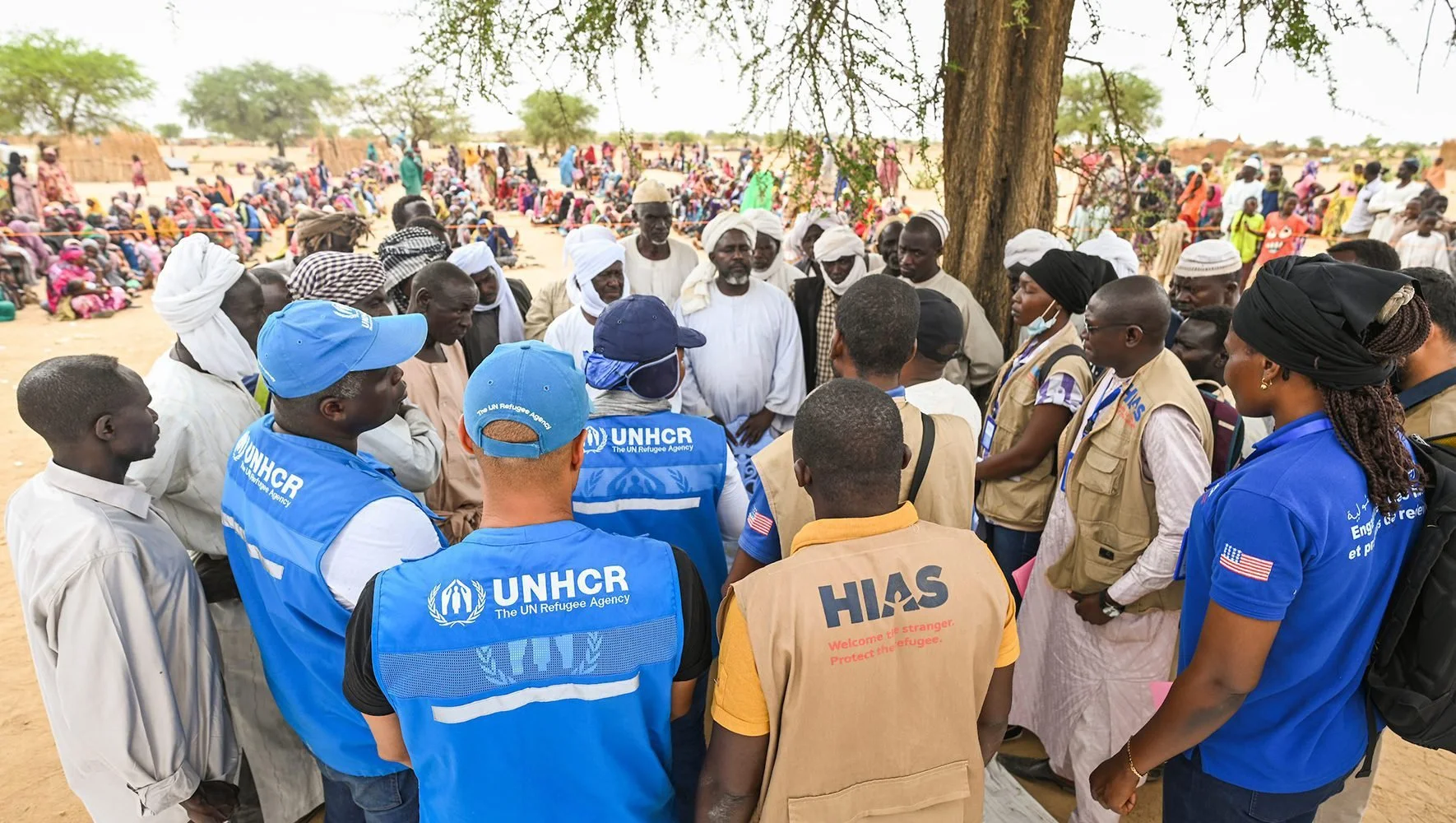
United Nations High Commission for Refugees (UNHCR) Details
What Is the United Nations High Commission for Refugees (UNHCR)?
The United Nations High Commissioner for Refugees (UNHCR) is a vital agency within the United Nations system, dedicated to protecting and supporting refugees, displaced persons, and stateless individuals worldwide. Its primary mission is to safeguard the rights and well-being of those forced to flee their homes due to conflict, persecution, or human rights violations. Established in 1950, UNHCR provides emergency assistance, facilitates durable solutions such as voluntary repatriation, local integration, or resettlement, and advocates for international protection standards. The agency operates globally, often in collaboration with governments, NGOs, and other UN bodies, playing a crucial role in alleviating human suffering and promoting the dignity and rights of displaced populations.
Topics
Addressing online misinformation and animosity targeting refugees.
Online misinformation, disinformation, and hate speech targeted at refugees have expanded at alarming rates, often translating into real-world violence, discrimination, and hostility. False claims that refugees are responsible for rising crime rates or receiving preferential treatment over local citizens are weaponized to stir up fear and undermine public support for humanitarian protection. This issue has been further exacerbated by AI, which allows the generation of toxic content and cheap, anonymous distribution at scale. UNHCR has documented various cases where coordinated disinformation attacks have resulted in physical violence, social marginalization, and restricted asylum policies in host countries.
Delegates will focus on formulating strategies to combat digital hate speech, promote digital literacy, and protect displaced populations from targeted online harassment. Discussions will include establishing multi-stakeholder partnerships with social media platforms, enhancing monitoring systems for online threats, fostering social cohesion between refugees and host communities, and safeguarding asylum rights against public hostility fueled by false narratives.
Strengthening the protection of refugees along the Southeast Asia migratory route, and their access to resources, and support networks.
The migratory routes across Southeast Asia—encompassing both perilous maritime journeys across the Bay of Bengal and the Andaman Sea and complex overland passages—present critical humanitarian challenges for refugees and asylum seekers. Displaced populations, including large numbers of stateless Rohingya, routinely endure dangerous sea crossings, pushbacks at borders, indefinite detention, and exploitation by human trafficking syndicates. Because many states in the region are not signatories to the 1951 Refugee Convention, legal protections remain inconsistent and humanitarian access is frequently restricted.
Delegates in UNHCR must focus on developing robust regional protection frameworks and strengthening humanitarian support networks. Discussions will center on expanding search-and-rescue operations at sea, establishing safe disembarkation protocols, ending arbitrary detention, enhancing access to essential healthcare, education, and legal assistance, and strengthening regional cooperation among ASEAN member states and international aid organizations.