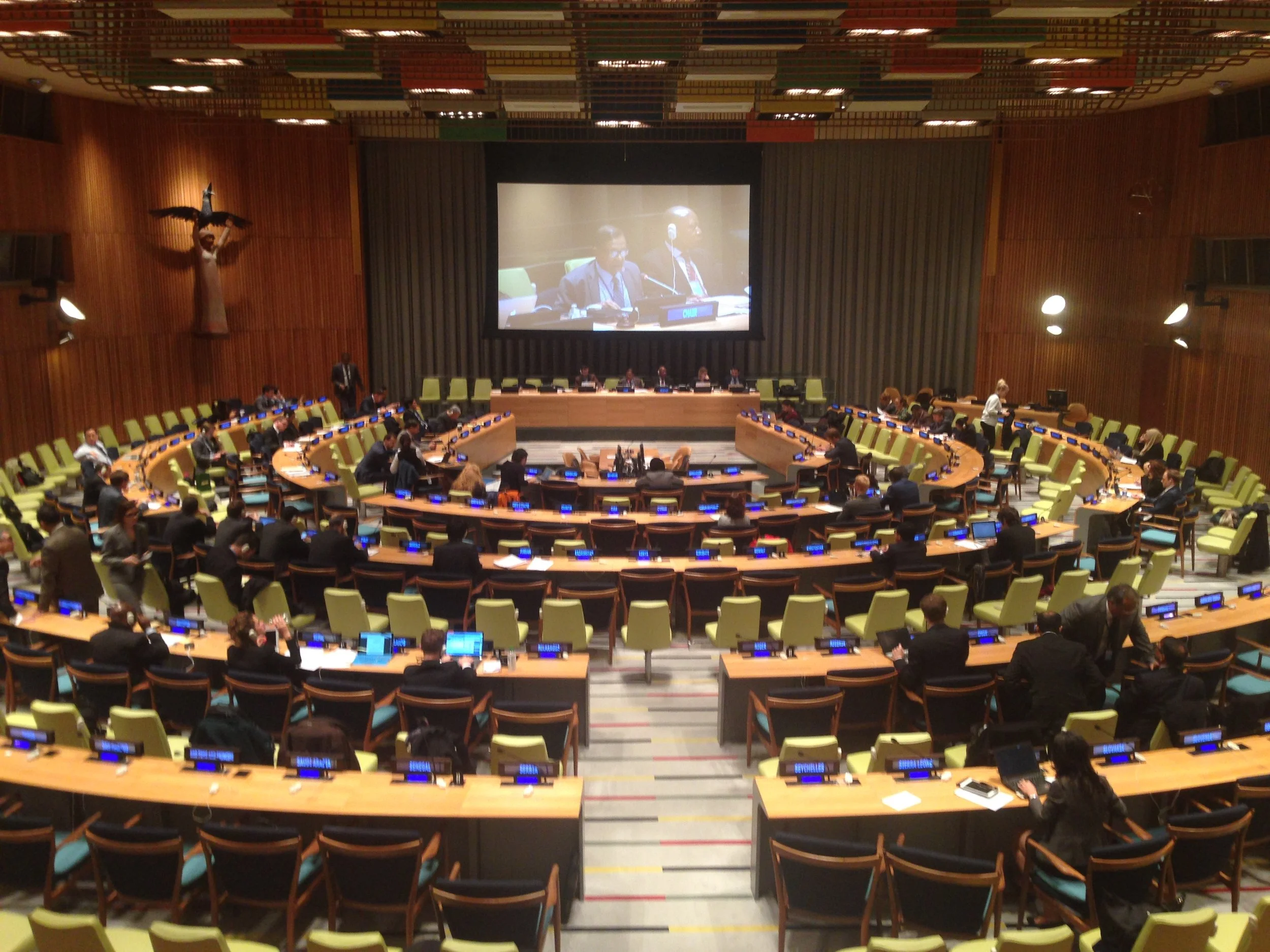
General Assembly 6 (Legal Committee) Details
What Is the General Assembly 6 (Legal Committee)?
The Sixth Committee of the United Nations General Assembly, commonly referred to as GA6 or the Legal Committee, is the primary forum within the UN system for the consideration of legal questions. It is tasked with examining, and developing international law across a broad spectrum of issues, from the codification of customary international law to the drafting of new treaties and conventions. GA6 works closely with the International Law Commission, and provides a space for states to debate, negotiate, and refine the legal rules that govern international relations. All UN member states are members of the Sixth Committee, and its outputs, often in the form of model laws, draft conventions, or resolutions, carry significant weight in shaping the development of international legal norms.
Topics
Navigating the legal implications of AI in creating and sharing deepfakes, and synthetic media.
Deepfakes and AI-generated synthetic media represent one of the most disruptive technological developments in the modern information environment. Using increasingly accessible artificial intelligence tools, individuals can now create highly convincing fabricated videos, audio recordings, and images, from fake political speeches to non-consensual intimate imagery. The consequences are profound: erosion of public trust in media, interference in electoral processes, reputational destruction of individuals, and the weaponization of disinformation.
The legal landscape governing synthetic media is fragmented, and largely inadequate. Some states have enacted narrow laws targeting specific harms - electoral deepfakes or non-consensual intimate imagery, for example - but there is no comprehensive international legal framework. Fundamental legal questions remain unresolved: Who is liable when a deep fake causes harm - the creator, the platform, the AI developer? Does existing copyright law apply to AI-generated content? How do we balance regulation with freedom of expression?
GA6 delegates must work toward developing international legal standards that address these questions. This includes examining how existing international law - including human rights law, intellectual property law, and the law of state responsibility - applies to synthetic media, and where gaps require new legal instruments. Delegates must also consider enforcement challenges in an environment where deepfake tools are globally distributed and often anonymous.
Addressing the development of international legal standards to regulate cross border cyber operations, and digital surveillance.
The rapid expansion of state-sponsored cyber operations and transnational digital surveillance has introduced complex legal gray zones into international law. States and non-state actors frequently conduct cross-border cyber intelligence gathering, infrastructure interference, and digital monitoring without clear consensus on where sovereign boundaries begin and end in cyberspace. Existing international legal instruments, such as the UN Charter and the International Covenant on Civil and Political Rights (ICCPR), provide baseline principles on sovereignty, non-intervention, and privacy rights, yet their application to digital threats remains fiercely contested among member states.
GA6 delegates must address these critical gaps by evaluating how customary international law applies to cyber activities and assessing the feasibility of new universal legal standards. Key considerations include establishing legal definitions for cyber aggression, assigning state responsibility for proxy actors, establishing clear attribution thresholds, and safeguarding individual privacy rights against extraterritorial digital surveillance while maintaining valid national security exceptions.